I count my blessings every day of the week
“Monday, I could wait till Tuesday if I make up my mind, Wednesday would be fine, Thursday’s on my mind, Friday’d give me time, Saturday could wait, but Sunday’d be too late…”
Sting wrote those words for a song called “Seven Days” from his “Ten Summoners’ Tales” album in 1994. It’s one of a few pop songs I’ve discovered with lyrics that mention all the days of the week, including the 1961 girl-group confection “I Met Him on a Sunday” and the iconic blues number “Stormy Monday.”
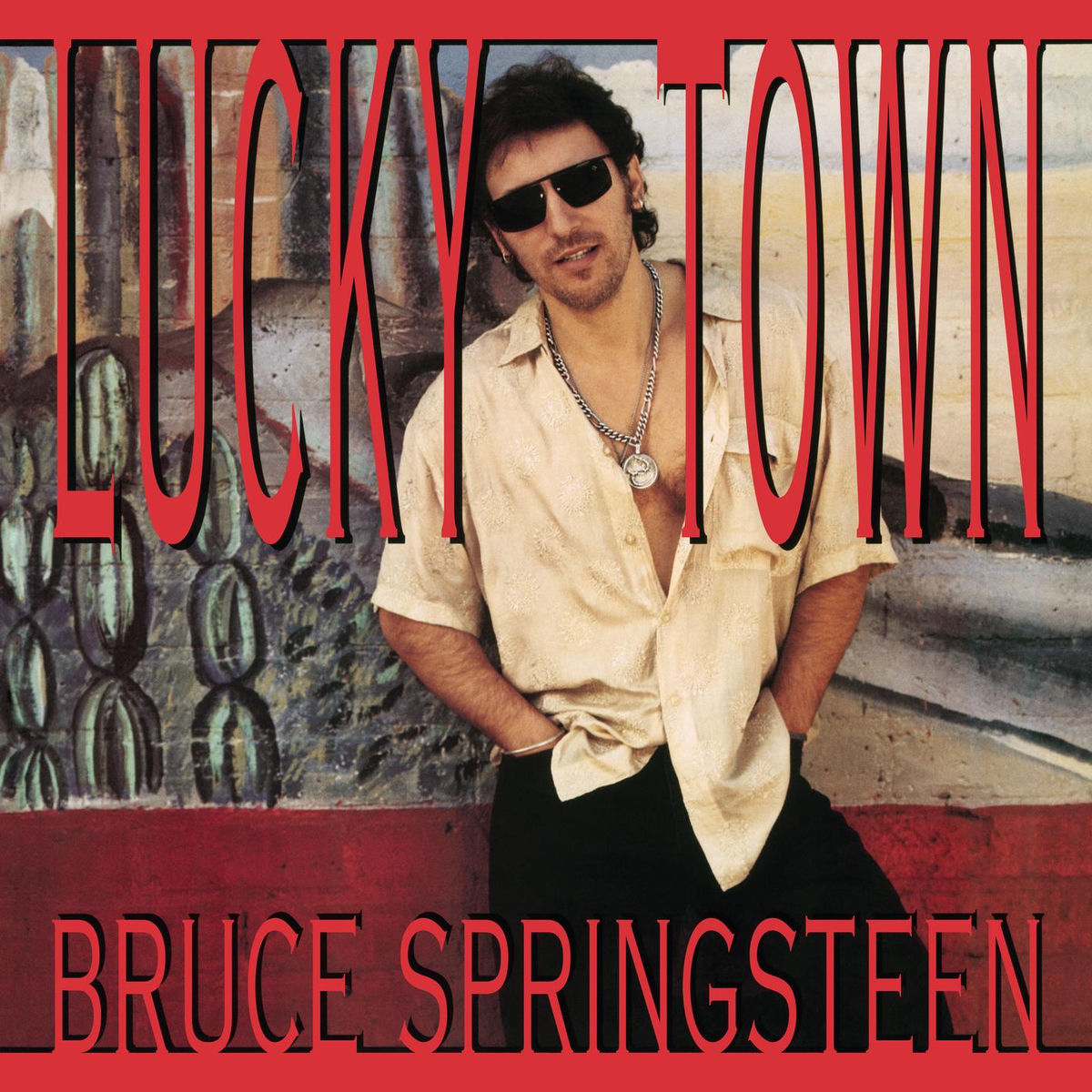
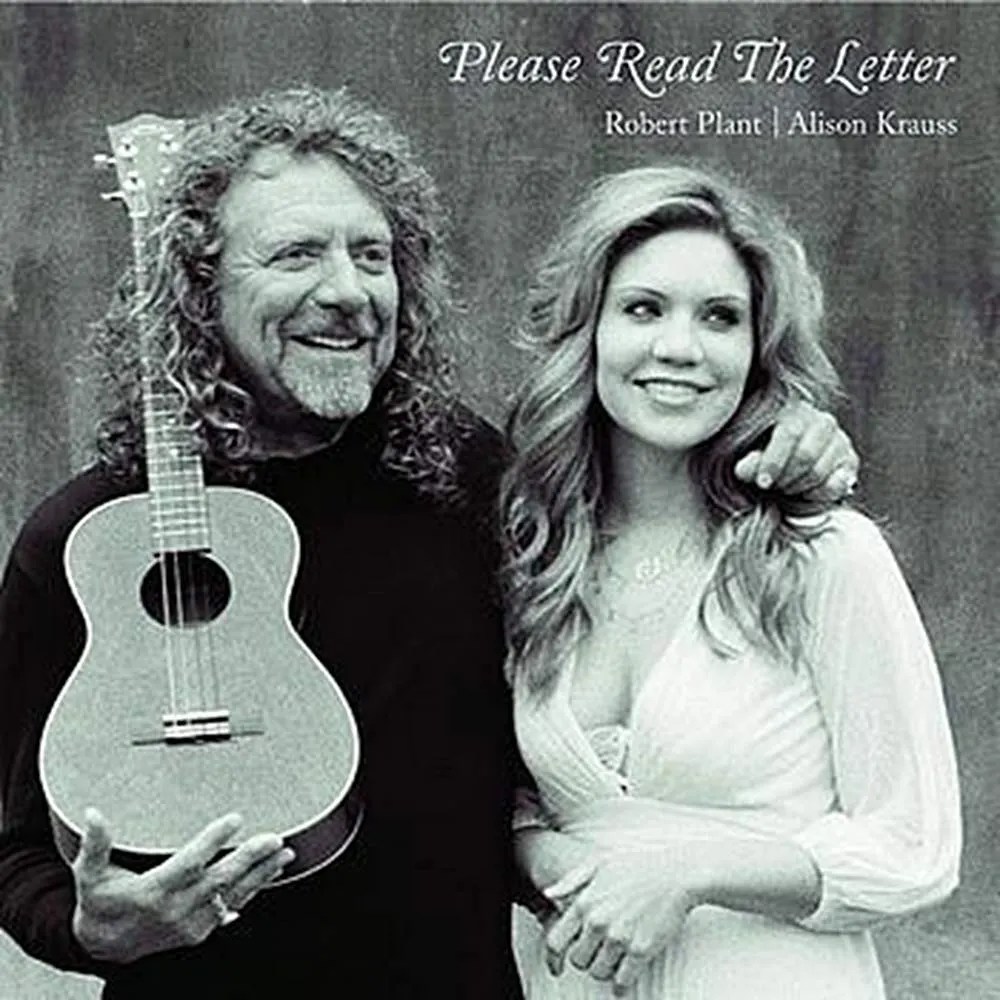
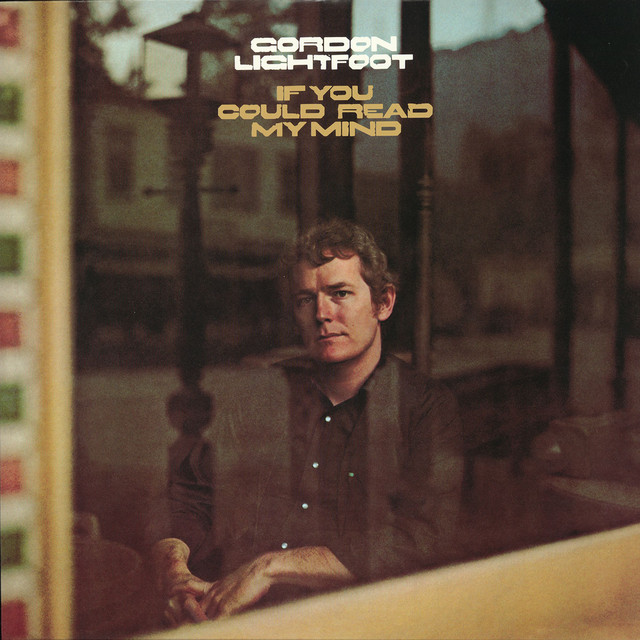
These songs got me thinking about songs that mention the specific days of the week in the title, and I’ve compiled a fairly extensive list here.
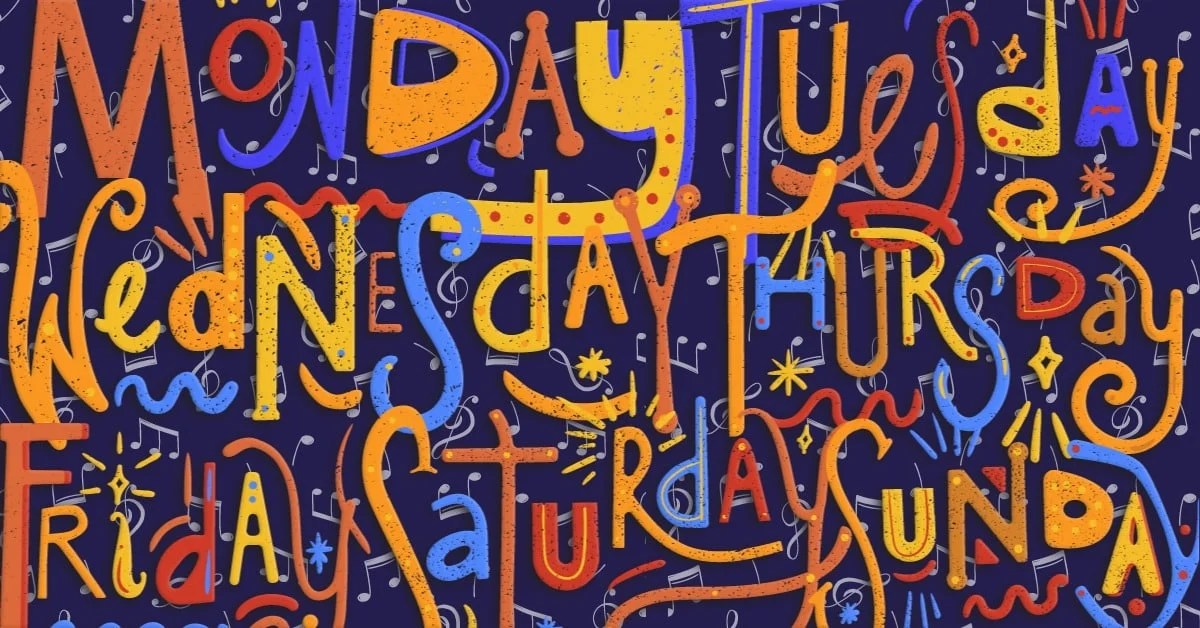
Perhaps it’s not surprising that there are more popular songs about Saturday and Sunday than all the other days combined. Why not? We love our weekends, after all. Mondays rank third in frequency, maybe because we tend to complain about the things we dislike almost as much as we love to celebrate the things we like.
Tuesdays come next, for no apparent reason, followed by Friday, Wednesday and Thursday, I guess because they’re nondescript mid-week days that aren’t all that inspirational to songwriters…
The Spotify playlist includes 72 songs, which may be a bit cumbersome, but in a nod to comprensiveness, I felt compelled to include pretty much all the tunes I discovered in my research.
Have a great week.
*******************************
Pop songwriters have had little good to say about MONDAY:
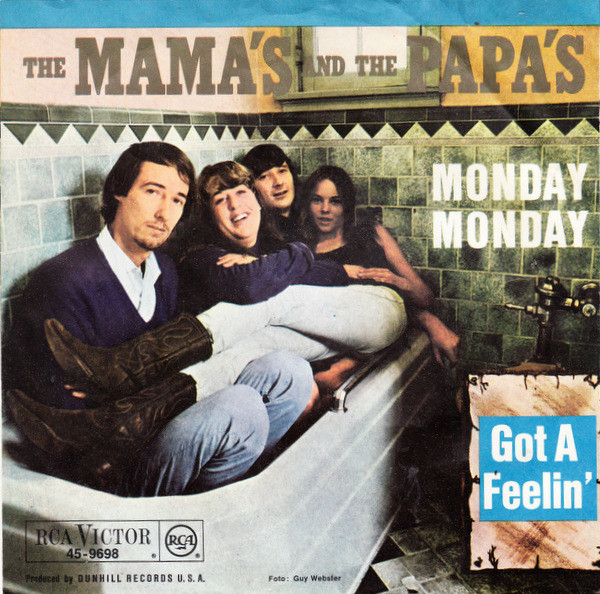
In 1966, Papa John Phillips of The Mamas and The Papas came up with the “Monday, Monday” lyrics that pretty much permanently cursed Monday in pop culture: “Every other day of the week is fine, fine, but whenever Monday comes, you’ll find me crying all of the time…”
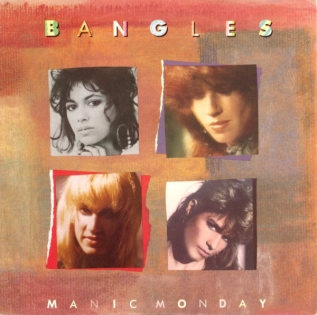
The Bangles rode to success in 1986 on the strength of Prince’s song “Manic Monday,” which reminds us of the drudgery of another workday commute and how much fun Sunday was by comparison: “It’s just another manic Monday, I wish it was Sunday, that’s my fun day, my I-don’t-have-to-run day…”
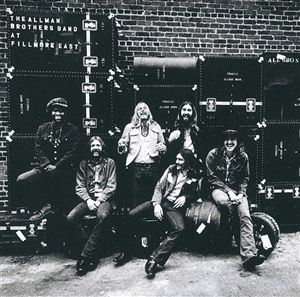
T-Bone Walker wrote the quintessential slow blues classic “Stormy Monday” back in 1947, and it’s been recorded by dozens of artists over the years, but the definitive version is the one captured live by the original lineup of The Allman Brothers Band in 1971 on their “At Fillmore East” double album. Gregg Allman sings the lyrics that use the days of the week to chronicle feelings of lost love: “They call it stormy Monday, but Tuesday’s just as bad… Wednesday’s worse, and Thursday’s also sad… The eagle flies on Friday, and Saturday I go out to play… Sunday I go to church, and I kneel down and pray… Lord have mercy on me, I’m tryin’ to find my baby, won’t someone please send her home to me…”
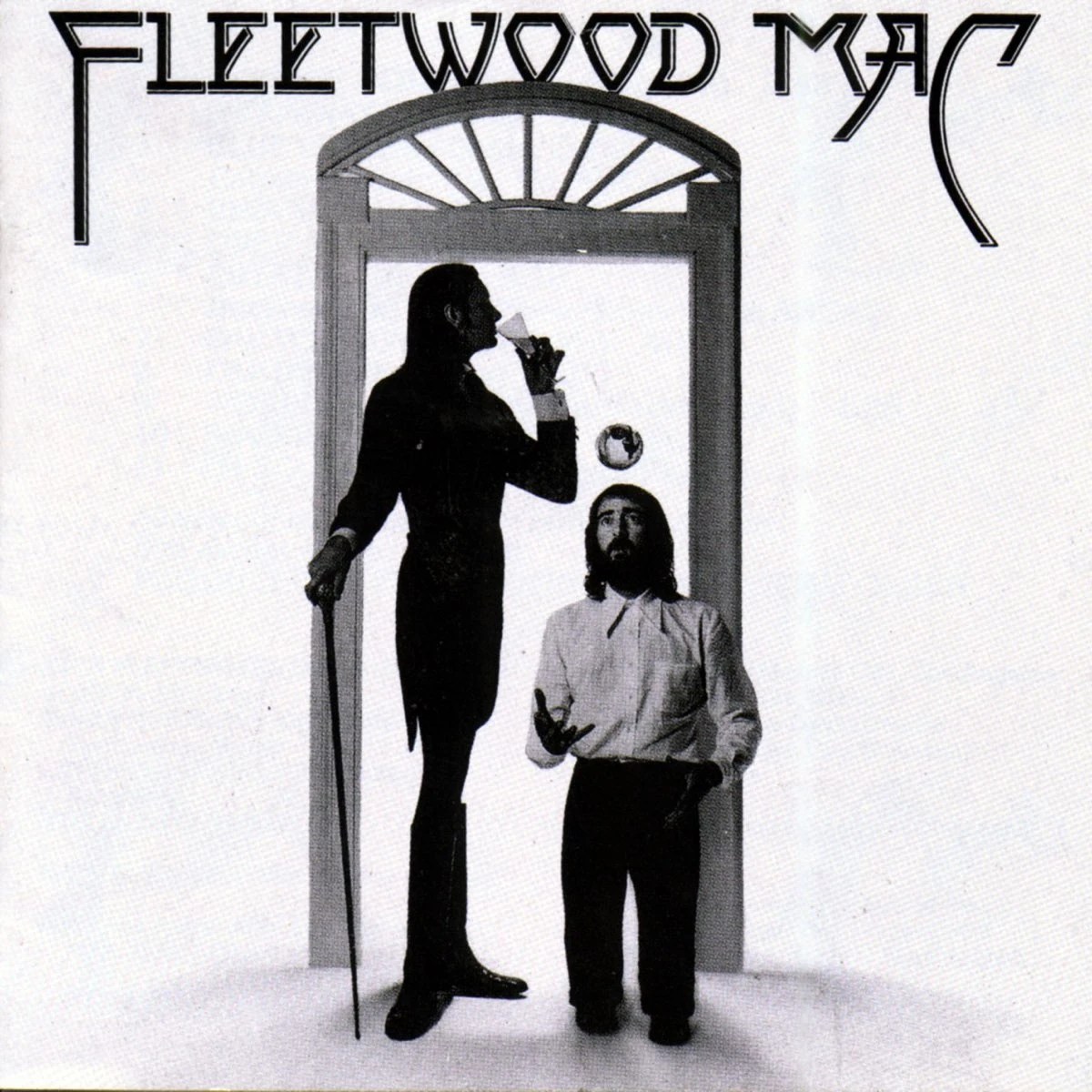
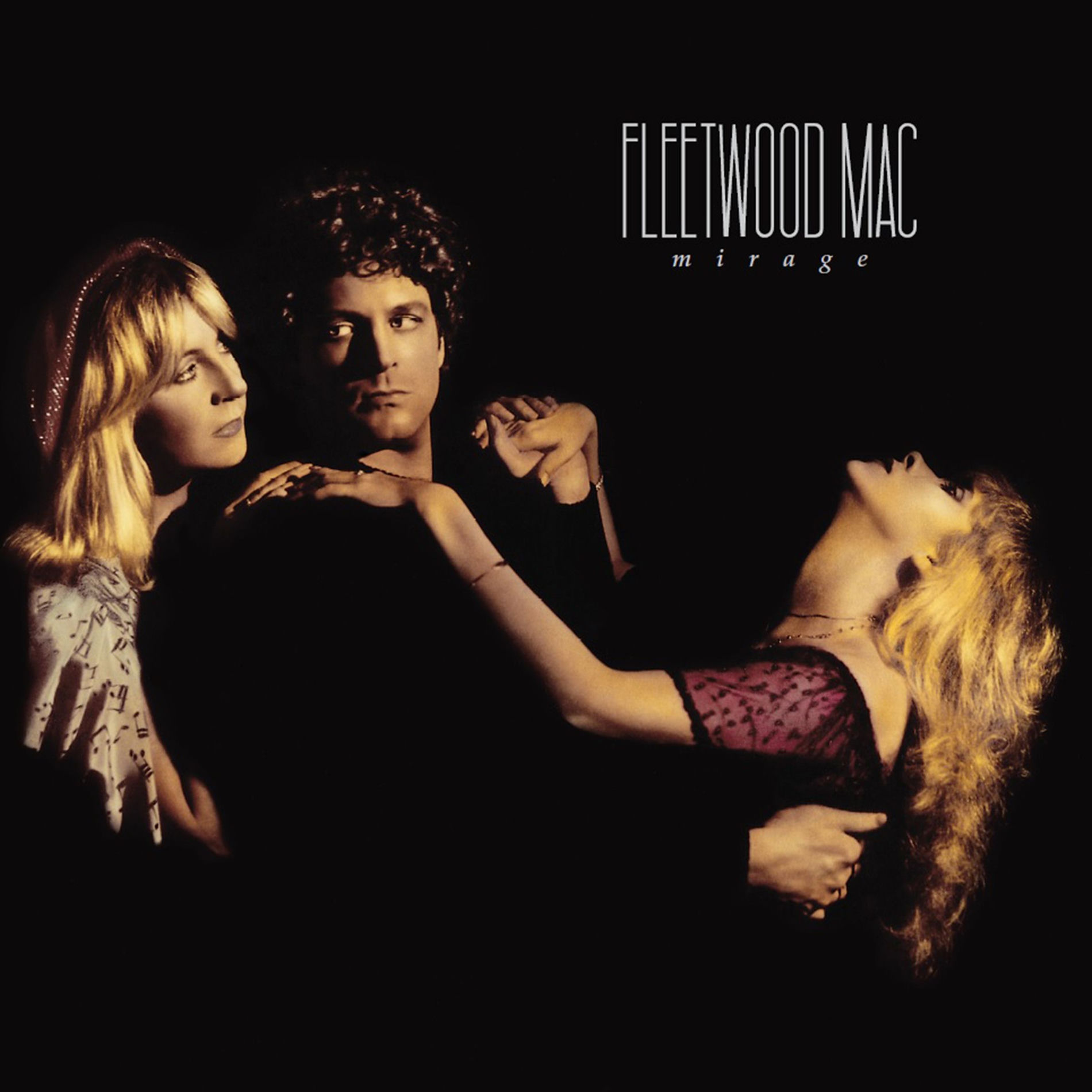
Lindsey Buckingham’s “Monday Morning” kicks off the new version of Fleetwood Mac found on the 1975 “Fleetwood Mac” LP, and it starts out positively, saying“You look so fine,” but soon moans, “First you love me, then you fade away, I can’t go on believing this way…”
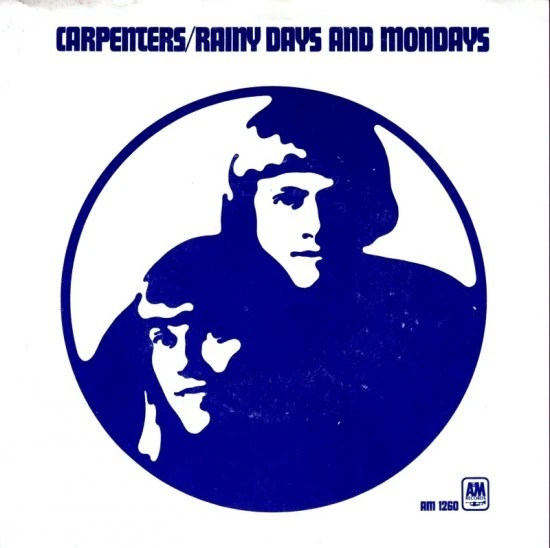
The songwriting team of Paul Williams and Roger Nichols had their first major success writing songs for The Carpenters. First was “We’ve Only Just Begun” (originally used as a bank commercial) and then “Rainy Days and Mondays,” a #2 hit in 1971: “What I’ve got they used to call the blues, nothing is really wrong, feeling like I don’t belong, walking around, some kind of lonely clown, rainy days and Mondays always get me down…”
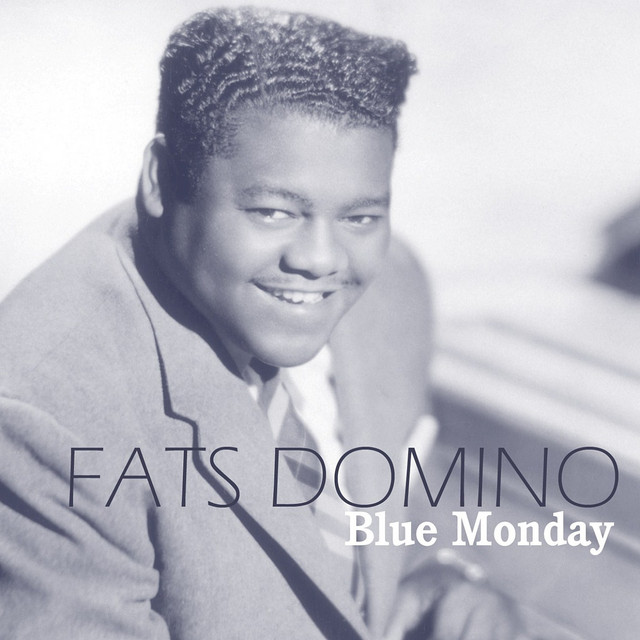
New Orleans keyboard giant and rock ‘n’ roll pioneer Fats Domino has a handful of early rock hits (“Blueberry Hill,” “I’m Walkin’,” “I Want to Walk You Home”) but one of his biggest was his rearrangement of jazz trumpeter Dave Bartholomew’s “Blue Monday” which managed to reached #5 on US pop charts in early 1957: “Blue Monday, how I hate blue Monday, got to work like a slave all day…”
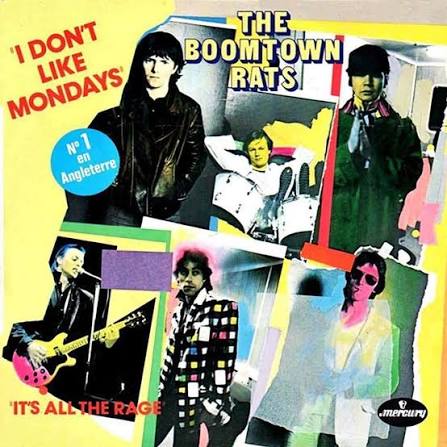
Bob Geldof of The Boomtown Rats isn’t all that well known in the US, except for his pivotal role in organizing the Live Aid concerts in 1985, but he was a star in his native England, where his biggest hit was “I Don’t Like Mondays,” a 1979 chart-topper that questions why he so dislikes the first day of the week: “Tell me why I don’t like Mondays, I want to shoot the whole day down…”
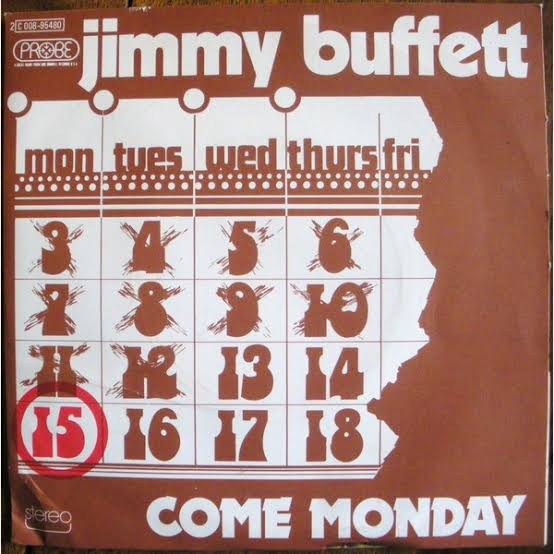
In 1974, Jimmy Buffett was on tour in California when he wrote “Come Monday,” in which he was actually looking forward to Monday because that’s when he’d be reunited with his wife: “Come Monday, it’ll be all right, come Monday, I’ll be holding you tight, /I spent four lonely days in a brown L.A. haze and I just want you back by my side…”
*****************************
I identified nine tunes whose titles mention TUESDAY:
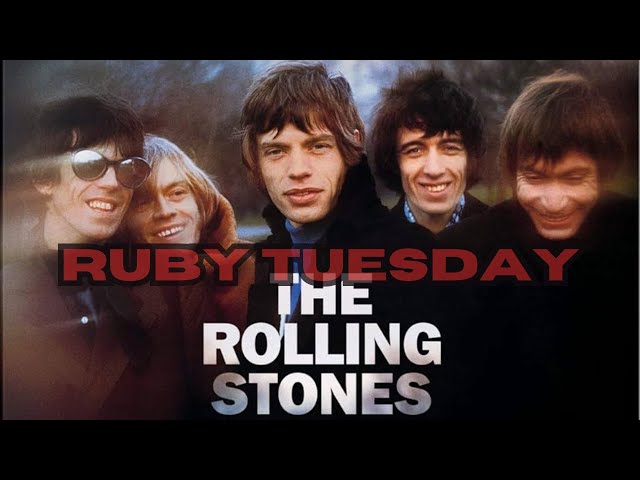
Most of The Rolling Stones catalog has been written by Mick Jagger and Keith Richards in partnership, but the quasi-baroque ballad “Ruby Tuesday” is solely by Richards, singing about Linda Keith, his off-and-on girlfriend at the time. It was intended as the B-side of the single featuring “Let’s Spend the Night Together,” but that song’s then-controversial lyrics drove radio to play “Ruby” instead, and it became the group’s fourth #1 in the US in early 1967: “While the sun is bright, or in the darkest night, no one knows, she comes and goes, /Goodbye, Ruby Tuesday, who could hang a name on you? /When you change with every new day, still I’m gonna miss you…”
Just as you might expect, singer-songwriter-guitarist Justin Hayward wrote “Tuesday Afternoon” while sitting in the middle of a field near his home in England on a beautiful spring afternoon. It became part of The Moody Blues‘ 1967 concept album “Days of Future Passed,” which pioneered the idea of incorporating symphonic instruments into rock band arrangements. The song reached #24 on US charts in the summer of 1968: “I’m looking at myself, reflections of my mind, it’s just the kind of day to leave myself behind, /So gently swaying thru the fairy-land of love, if you’ll just come with me and see the beauty of Tuesday afternoon…”
Cat Stevens has said the lyrics he wrote for the songs on “Tea for the Tillerman” (1970) and “Teaser and the Firecat” (1971) were full of existential doubt and searching, brought on by his near-fatal bout of tuberculosis three years earlier. The refrain on “Tuesday’s Dead” questions pessimism, challenging the idea that a day (or a moment in time) is already wasted, gone, or dead before it has even been lived: “Now, man may live, man may die, searching for the question why, /But if he tries to rule the sky, he must fall, /Whoa, where do you go when you don’t want no one to know? Who told tomorrow Tuesday’s dead?…”
The Canadian band that called themselves The Cowboy Junkies specialized in “alternative country” in the 1990s, making inroads on pop and mainstream rock charts in the US and Canada. Oner of their more notable songs was “Sun Comes Up, It’s Tuesday Morning,” in which the narrator offers examples of how mundane his existence has become since losing his lover: “Sun comes up, it’s Tuesday morning, hits me straight in the eye, /Guess you forgot to close the blind last night, oh, that’s right, I forgot, it was me, /I sure do miss the smell of black coffee in the morning… Here comes that feeling that I’d forgotten, how strange these streets feel when you’re alone on them…”
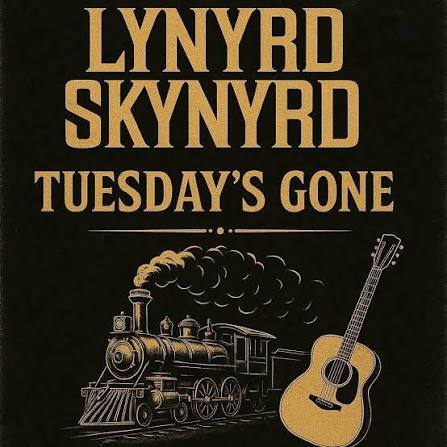
Classic rock radio has done a disservice to Southern rockers Lynyrd Skynyrd by limiting their radio exposure to “Sweet Home Alabama” and “Freebird,” but there are many other tracks deserving our attention, starting with “Tuesday’s Gone,” a seven-minute tour-de-force from their 1973 debut LP. Its lyrics despair over the end of a relationship, and musically, the band extends the piece with multiple instrumental solos: “I don’t know where I’m going, I just want to be left alone, /Well, when this train ends I’ll try again, but I’m leaving my woman at home, /Tuesday’s gone with the wind…”
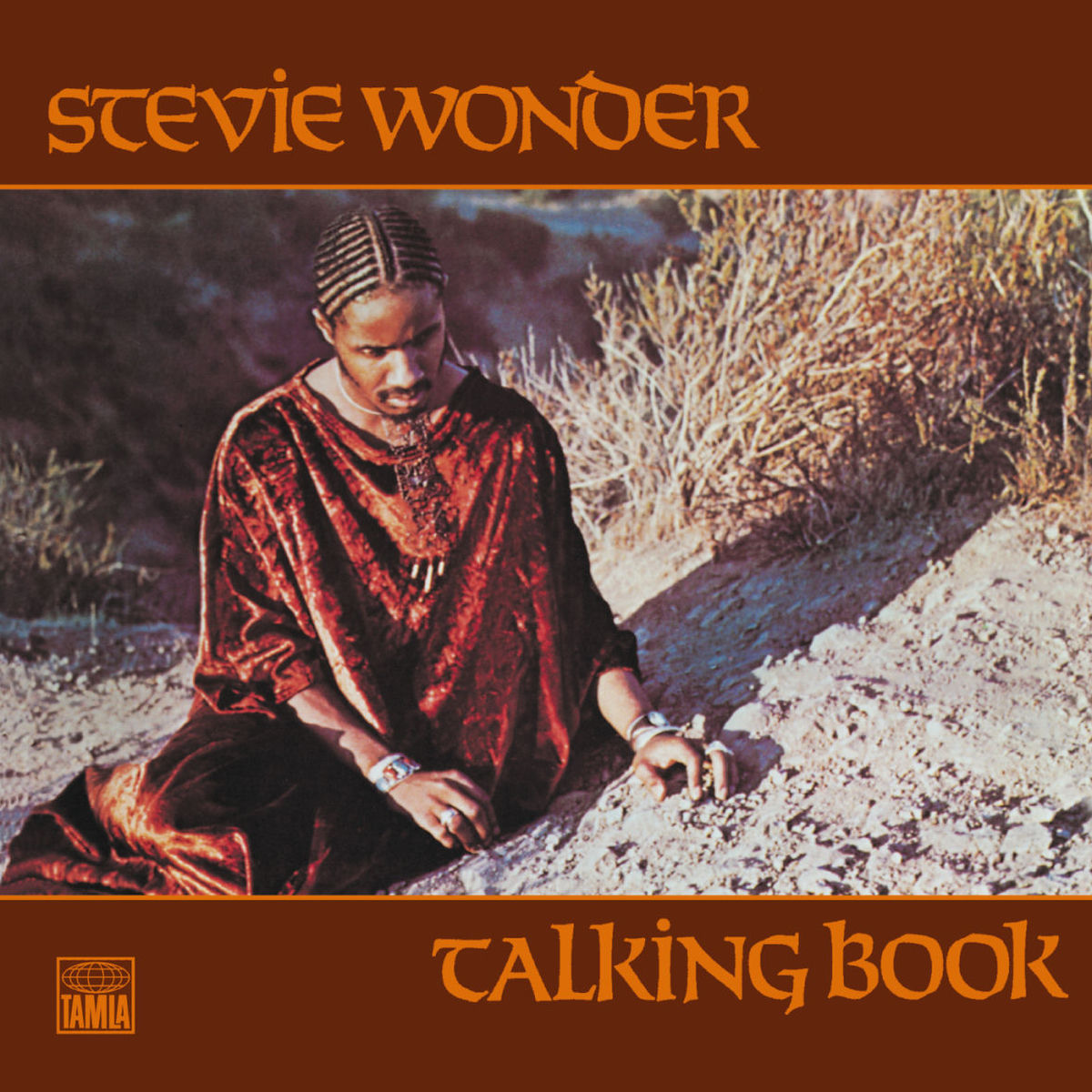
There’s something about the second day of the week that seems to bring cruel reality home like a slap to the face. On “Tuesday Heartbreak,” a catchy slice of funk from Stevie Wonder‘s Grammy-winning “Talking Book” LP in 1972, he obsesses on his desire to be with his lady even though she’s found someone else: “Tuesday heartbreak seem to be unfair ’cause you say that you found another man… /I wanna be with you when the nighttime comes, I wanna be with you when the daytime comes, I wanna stay, oh baby, lemme baby, baby with you…”
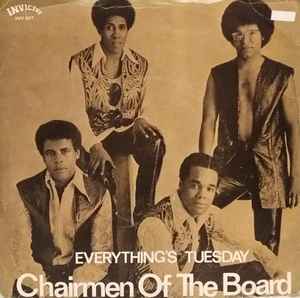
The hiccup-dotted vocal style of lead singer General Johnson became one of the marked characteristics of the American/Canadian soul band Chairmen of the Board, who reached #3 in 1970 with the big hit “Give Me Just a Little More Time.” Its follow-up single, “Everything’s Tuesday,” didn’t do as well, managing only #38, but its lyrics proclaim the joy of Tuesday, which in this case is not the day of the week, but a woman named Tuesday: “My heart was a lonely house where strangers wandered in and out, ooh, until Tuesday, /Everything is Tuesday, feeling light headed and woozy, everything’s been rosy since the day sweet Tuesday chose me…”
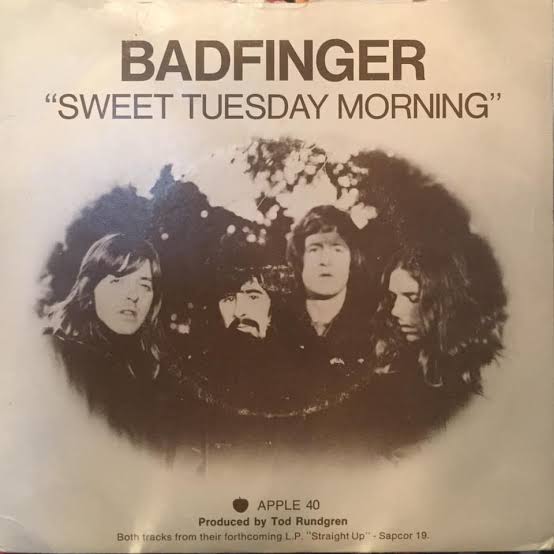
Joey Molland, lead guitarist of Badfinger, wrote “Sweet Tuesday Morning” as a love song to his wife, and it became one of the better tracks on the band’s commercially successful “Straight Up” LP in late 1971. It may have been lost in the shadow of the Top Ten hits “Day After Day” and “Baby Blue,” but it’s an appealing little acoustic tune that stands up on its own: “I’m in a brightness I can feel surround me, it’s the first time I’ve felt it for years, /Sweet Tuesday morning came, and you smiled, love is the answer you gave me…”
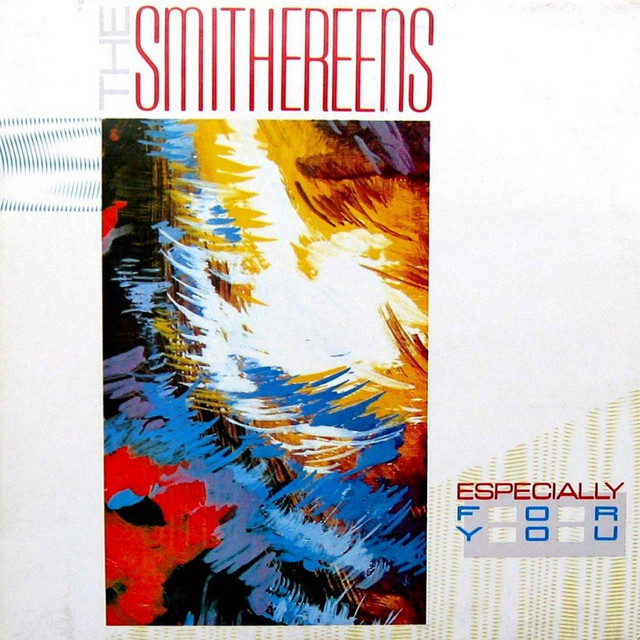
The New Jersey-based ’80s band The Smithereens had several radio hits in the late ’80s like “Only a Memory” and “House We Used to Live In.” Lead singer Pat DiNizio said he was hanging out with rocker Steve “Romeo’s Tune” Forbert in 1986 when they wrote “Groovy Tuesday” as a sort of tribute to the psychedelic pop groups of the late ’60s like The Chocolate Watchband and Strawberry Alarm Clock. It appeared on “Especially For You,” their debut LP: “Woke up on a groovy Tuesday, even my hangover’s fine, /Woke up on a groovy Tuesday, hung my mind out on the line, /Tuesday’s groovy, Tuesday’s groovy, though I know that nothing lasts…”
***************************
For WEDNESDAY, I could come up with only four:
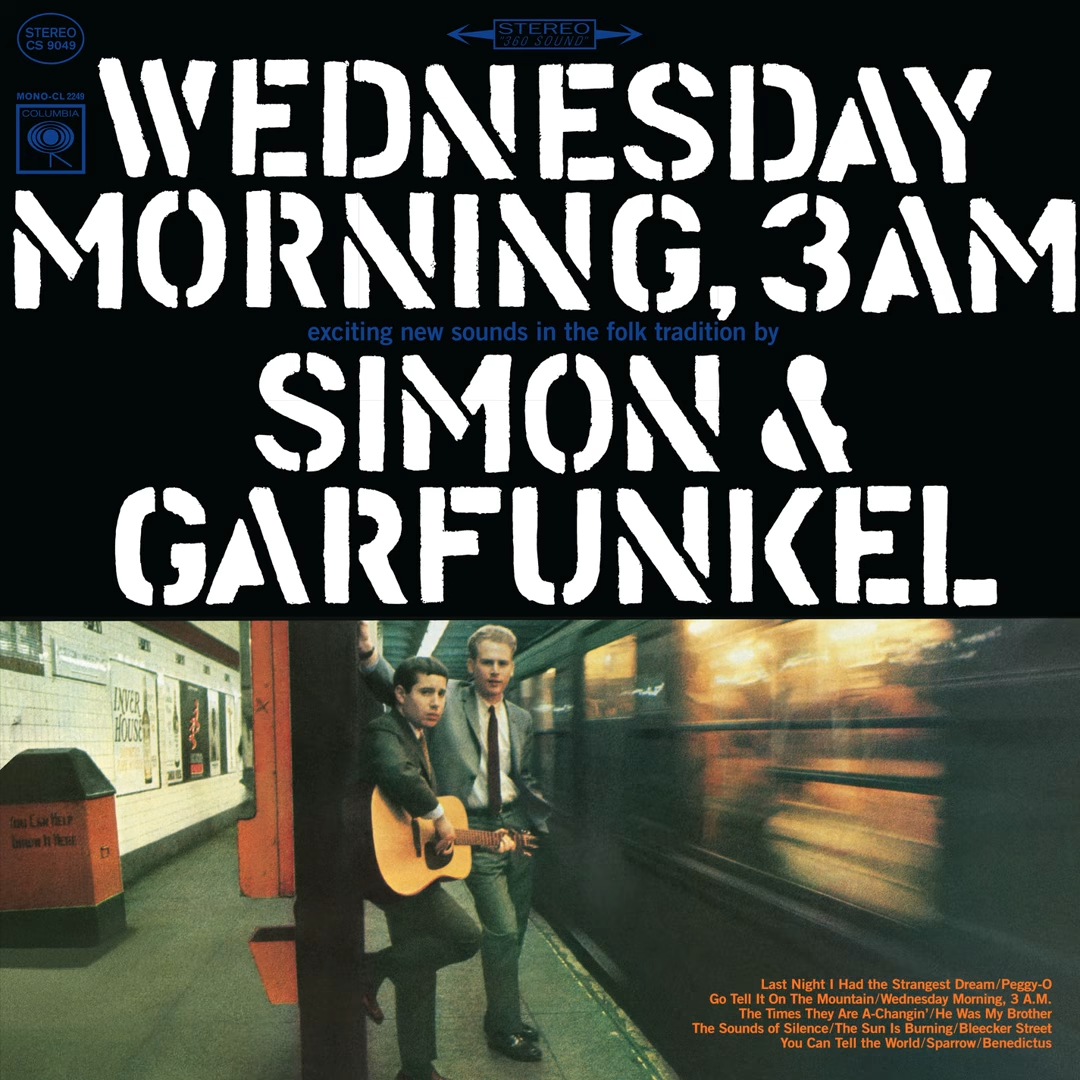
Among the songs Paul Simon wrote for Simon and Garfunkel‘s modest debut LP was “Wednesday Morning 3AM,” which became the album’s title song and closing track. It offers a snapshot of a man who, when he wakes in the wee hours one Wednesday morning, gazes at his lover in bed beside him but frets about how he must leave to avoid being caught by police for committing a robbery the previous evening. The lyrics were rebranded two yers later to become “Somewhere They Can’t Find Me” on their “Sounds of Silence” LP. “My life seems unreal, my crime an illusion, a scene badly written in which I must play, /Yet I know as I gaze at my young love beside me, the morning is just a few hours away…”
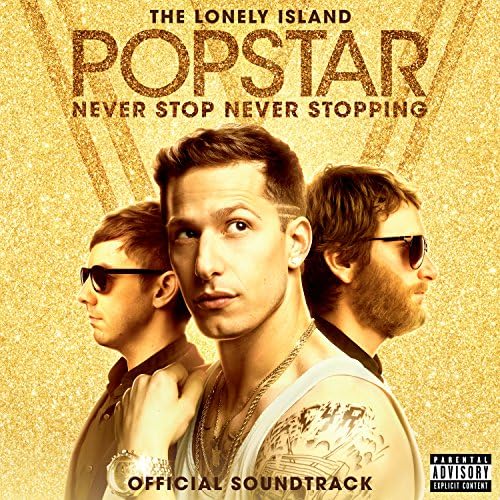
Comedians Andy Samberg, Akira Schaffer and Jorma Taccone were, collectively The Lonely Island, a musical comedy trio who wrote humorous songs for “Saturday Night Live” and other forums. They were the brainstorm behind a failed 2016 comedy called “Popstar: Never Stop Never Stopping,” which featured numerous musical artists doing cameos, one of which was singer Seal, who sang the lead on “Ashley Wednesday,” with silly lyrics about one of the film’s characters: “Ashley Wednesday, oh, you hit me like a tonne of bricks, with illuminous hair and your sturdy teeth, /I want our hearts to be joined at the hip, so to speak…”

After a modest start in 1990, virtuoso singer-songwriter Tori Amos broke through in 1994 with her “Under the Pink” LP, her first of nine Top Ten albums on US charts. In 2002, she was moved to write “Scarlet’s Walk,” a group of songs that chronicled a woman’s journey across the US in the wake of the 9/11 attacks. One of those was “Wednesday,” a Southern boogie song about the woman’s relationship with a man who leads secretive life: “Nothing here to fear, I’m just sitting around being foolish when there is work to be done, /Just a hang-up call and the quiet breathing of our persian we call Cajun, on a Wednesday, /So we go from year to year with secrets we’ve been keeping…”
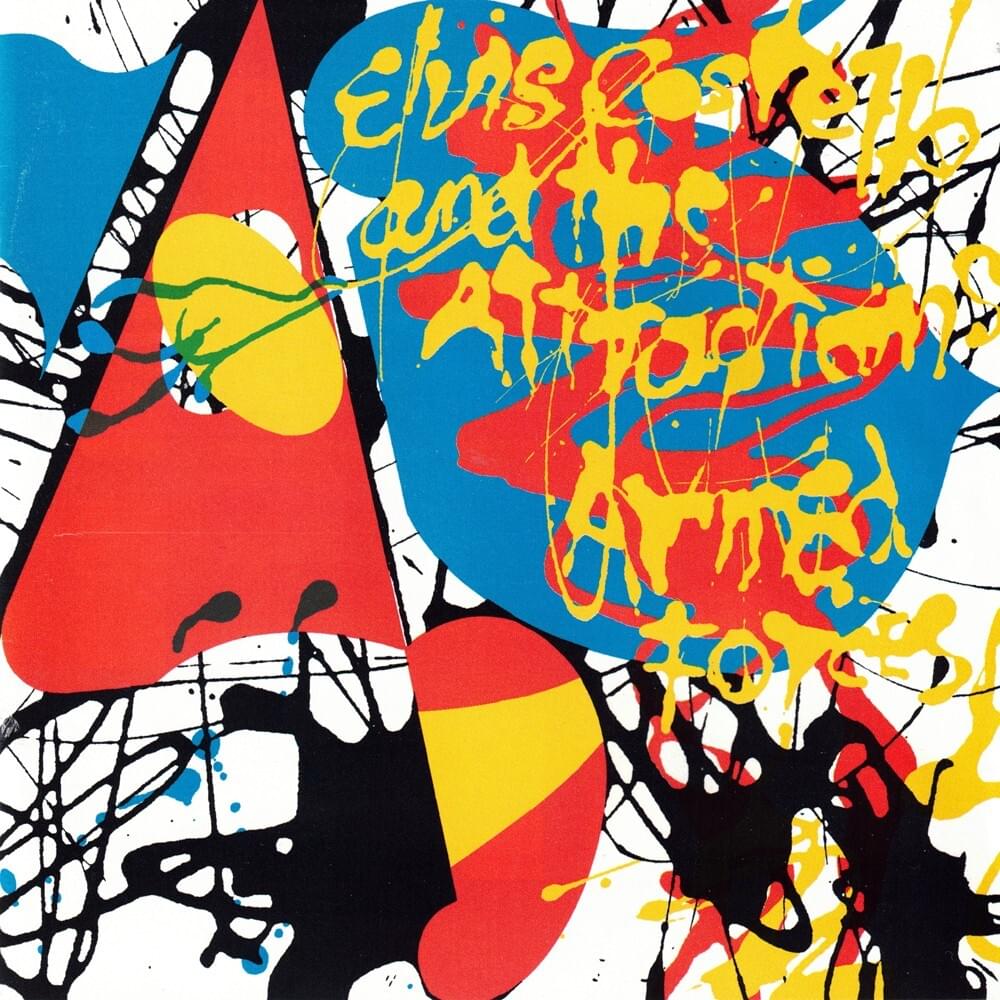
Elvis Costello‘s third album, 1979’s “Armed Forces,” was met with mixed reviews because it departed from the raw, vital approach evident on his first two LPs but it brought better production values and better constructed songs. The British rocker was full of confidence, writing and recording more than two dozen songs in the sessions before selecting 12 for the album. When it was reissued in the 1990s as a bonus CD, he included those outtakes, one of which was the short, frenetic “Wednesday Week“: “You can lead and I will follow, see us dancing cheek to cheek, /You’ll remember me tomorrow, but you won’t give a damn by Wednesday Week…”
**************************
I could find only four for THURSDAY as well:
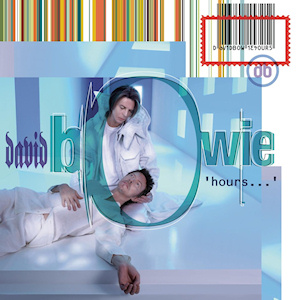
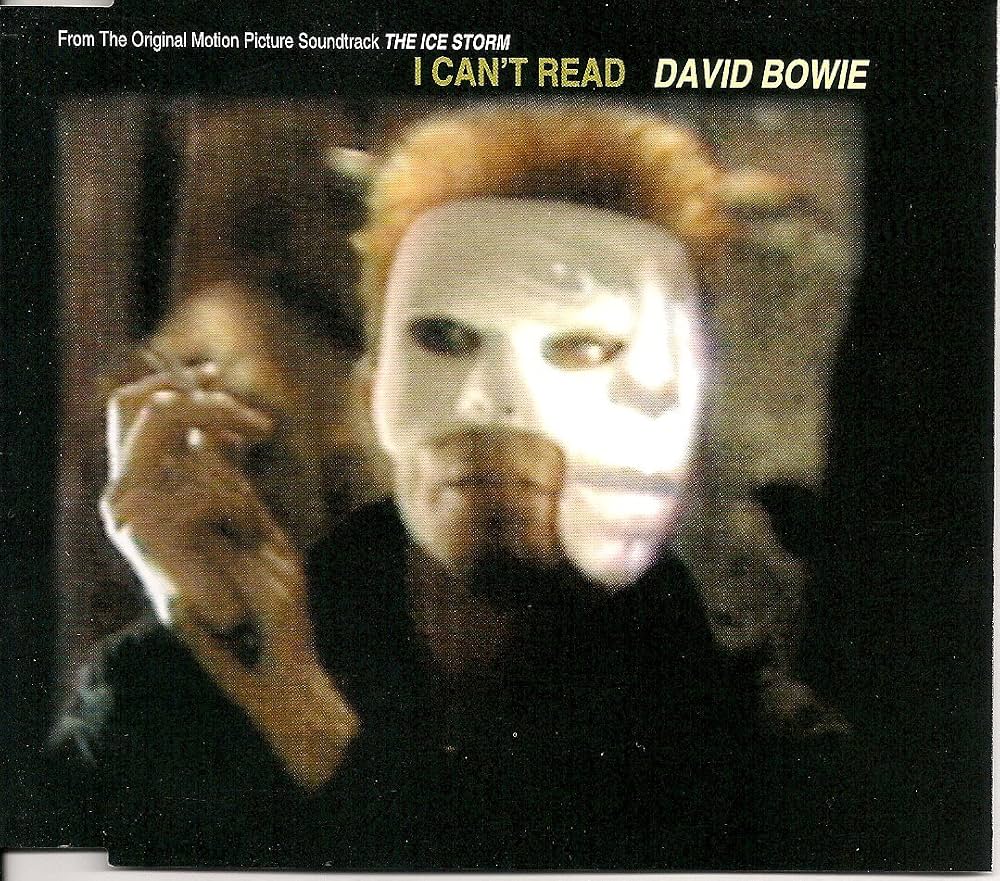
When David Bowie released the LP “Hours” in 1999, he chose “Thursday’s Child” as the lead single. He said the song was about “somebody that felt that he’d achieved everything he was ever going to achieve in his life and that the way forward looked bleak…until it was changed by meeting this person he falls in love with. So it’s like a glimmer of salvation in his life.” It didn’t chart in the US but reached #16 in his native UK: “All of my life I’ve tried so hard, doing my best with what I had, /Nothing much happened all the same… /Throw me tomorrow, seeing my past to let it go, /Throw me tomorrow, only for you I don’t regret that I was Thursday’s child…”

The Pet Shop Boys 12th album, 2013’s “Electric,” includes “Thursday,” which finds a young man eager to know if the girl he’s pursuing on Thursday will be sticking around through Sunday: “Thursday, then Friday, it’s soon gonna be the weekend, let’s start it tonight, babe, stay with me for the weekend, it’s Thursday night, let’s get it right…”
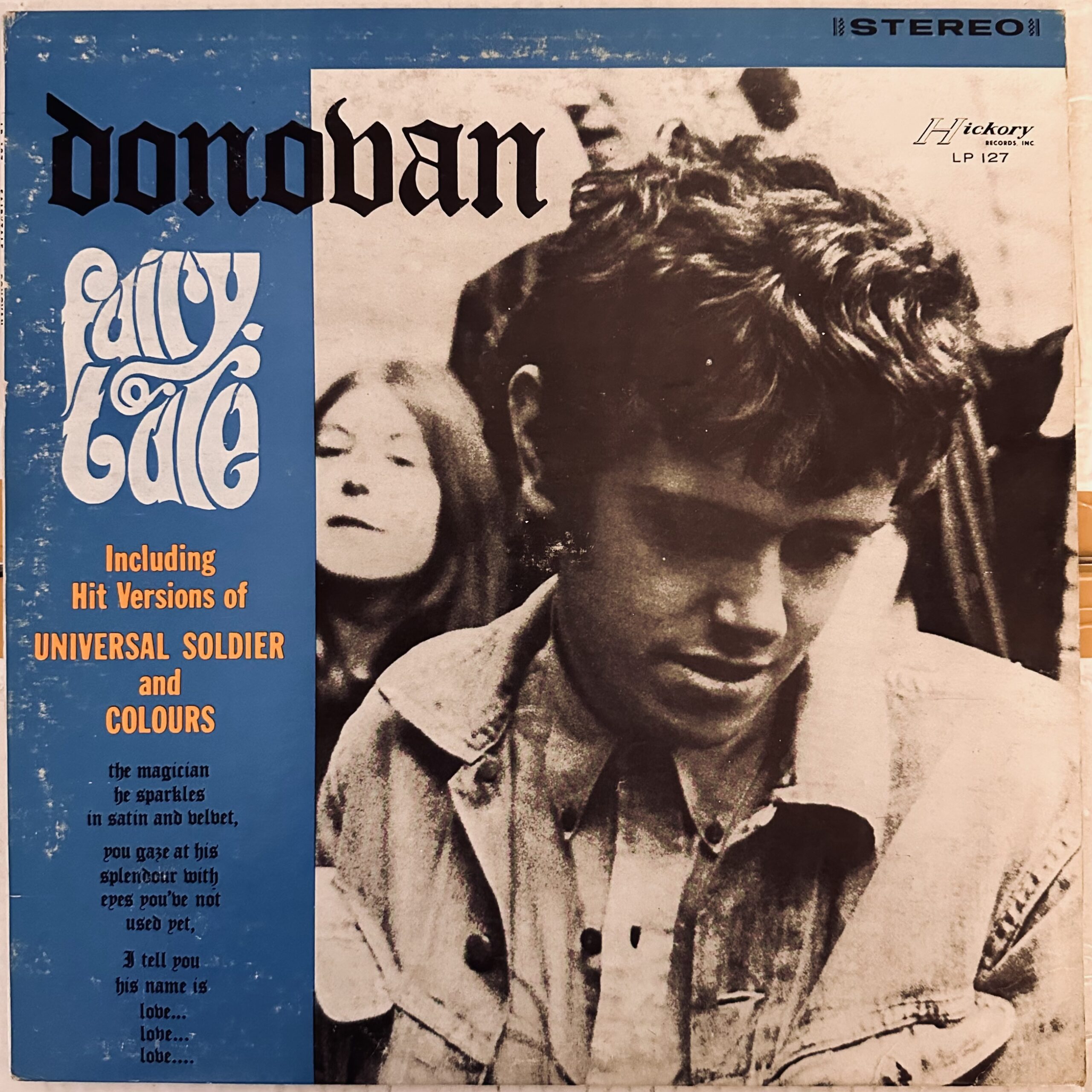
In 1965, Donovan was still evolving as a musician and songwriter, but there’s evidence on his second album “Fairytale” of the ethereal sounds and poetic words that would define his genre in the years ahead. His affinity for British folk music shows up on “Jersey Thursday,” a piece that offers enigmatic lyrics open to interpretation: “In the tiny piece of colored glass, my love was born, and reds and golds and yellows were the colors in the dawn, /Night brought on its purple cloak of velvet to the sky, and the girls go willing, spinning on Jersey Thursday…”
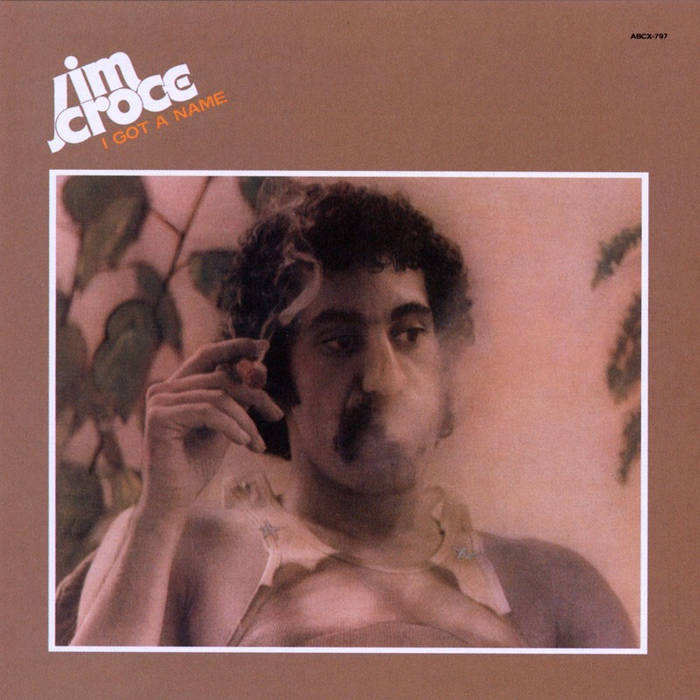
On Jim Croce‘s final LP, released posthumously after his death in a plane crash in 1973, you’ll find two hit singles: the title track, “I Got a Name,” and the wistful “I’ll Have to Say I Love You in a Song.” Both show Croce’s deft songwriting capabilities, as do deeper album cuts like “Thursday,” which doesn’t mention the title in the lyrics, but we can presume that’s what day it was when he realized his latest relationship wasn’t going to last: “Well, it started out just like a dream, and like a dream, I knew that what we had would have to end, /’Cause I was lookin’ for a lifetime lover, and you were lookin’ for a friend…”
*************************
FRIDAY gets good marks with songwriters, even though it’s mentioned only a half-dozen times or so.
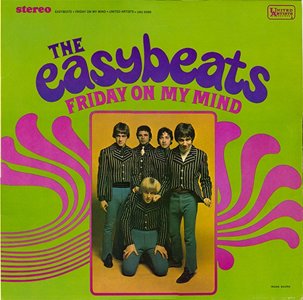
In the 1967 Easybeats classic “Friday on My Mind,” the lyrics discuss how we bravely endure the work week as we look forward to celebrating the arrival of the weekend each Friday: “Monday morning feels so bad, everybody seems to nag me, comin’ Tuesday, I feel better, even my old man looks good, Wednesday just don’t go, Thursday goes too slow, I got Friday on my mind…”
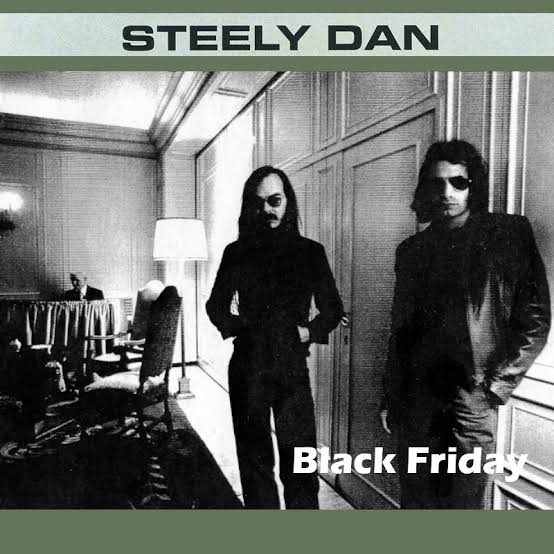
The 1929 stock market crash was known as Black Thursday, but “Black Friday,” the leadoff track from Steely Dan’s excellent 1975 album “Katy Lied,” offers a fictitious take on a stock speculator who profits from a financial crash and flees the country: “When Black Friday comes, I’ll stand down by the door and catch the grey men when they dive from the fourteenth floor, /When Black Friday comes, I’ll collect everything I’m owed, and before my friends find out, I’ll be on the road…”
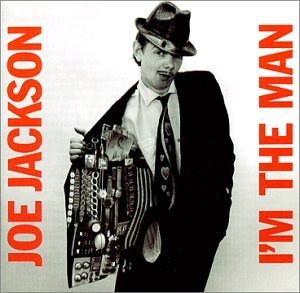
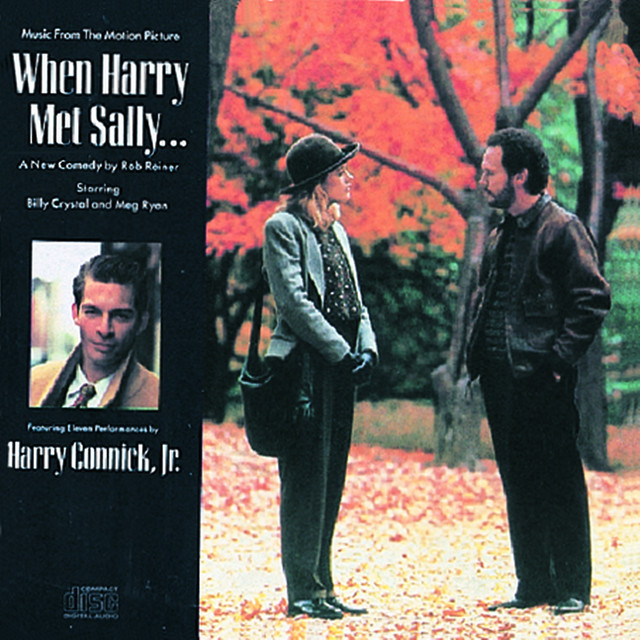
In Joe Jackson‘s “Friday,” the final track on his 1979 “I’m the Man” album, the protagonist has pretty much given up on life, miserable in her workday existence and living for payday, which arrives every Friday: “She don’t care no more, she don’t need to fight it, /She don’t care no more, she gets paid on Friday, /Pray you’ll make it, it’s a magic day, bells will ring and you’ll go out to play and spend your money…”
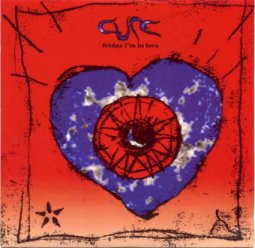
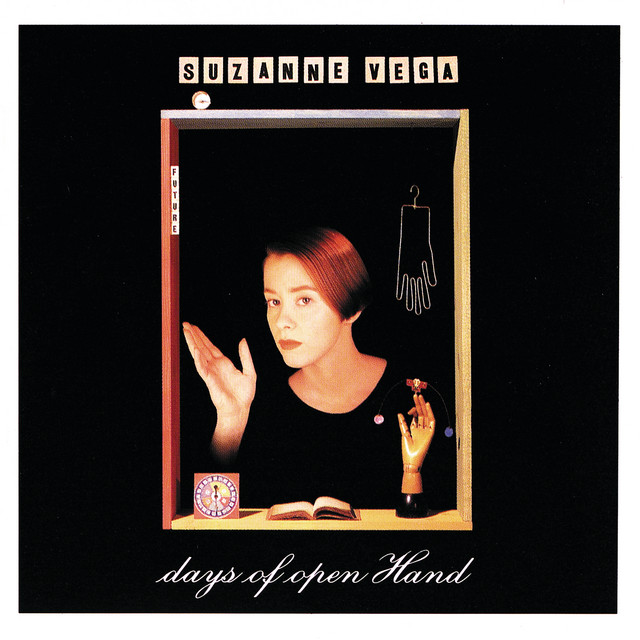
“Friday I’m in Love,” one of two songs by The Cure to make it to the Top 20 on the US singles chart, celebrates the day when everything goes right: “Monday you can fall apart, Tuesday, Wednesday, break my heart, oh, Thursday doesn’t even start, it’s Friday I’m in love, Saturday wait, and Sunday always comes too late, but Friday never hesitate…”
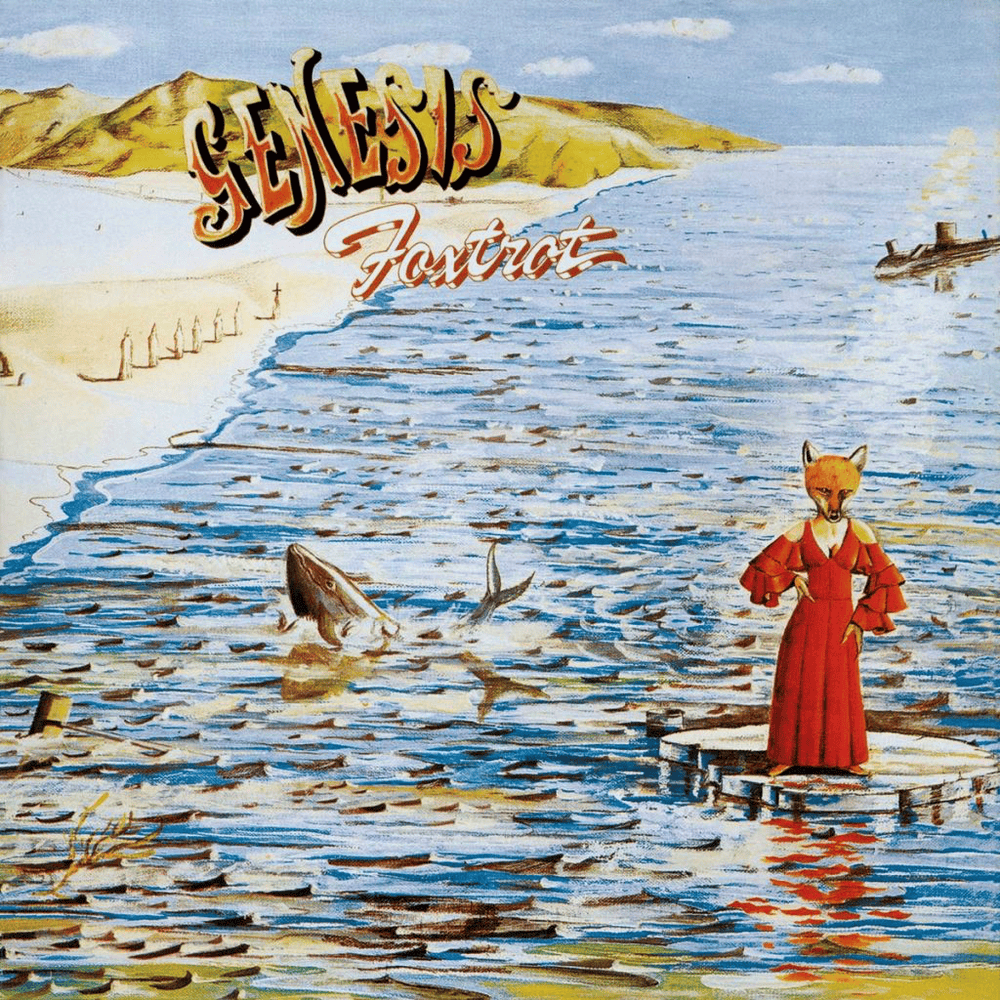
A spooky progressive rock track by Peter Gabriel-era Genesis called “Get ‘Em Out by Friday,” from their “Foxtrot” album (1972), tells the tale of renters being victimized by being forced out of lodgings by greedy real estate tycoons: “Get ’em out by Friday! You don’t get paid ’til the last one’s well on his way, /Get ’em out by Friday! It’s important that we keep to schedule, there must be no delay…”
*****************************
Ahh, but SATURDAY! Nearly two dozen songs turned up in my search, and they’re overwhelmingly praiseworthy of this day of the week, but a few have sad overtones. I’ve selected 10 to feature here, with another 12 consigned to honorable mention.
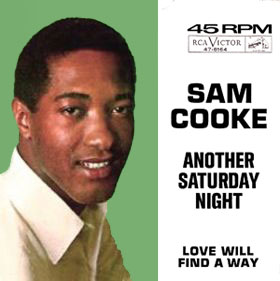
“Another Saturday Night,” a hit that Sam Cooke wrote and recorded in 1963 (and was later covered Cat Stevens in 1974), finds the narrator alone: “Another Saturday night, and I ain’t got nobody, I got some money ’cause I just got paid, /How I wish I had someone to talk to, I’m in an awful way…”
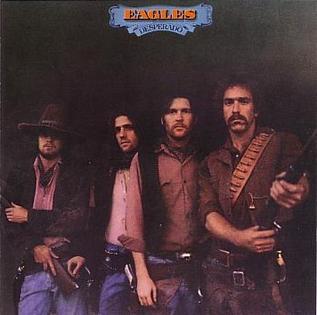
The Eagles’ lament “Saturday Night” from their 1973 album “Desperado” bemoans a failed relationship and asks, “Whatever happened to Saturday night, finding a sweetheart and holding her tight, She said ‘Tell me, oh tell me, was I all right?’ Whatever happened to Saturday night?”
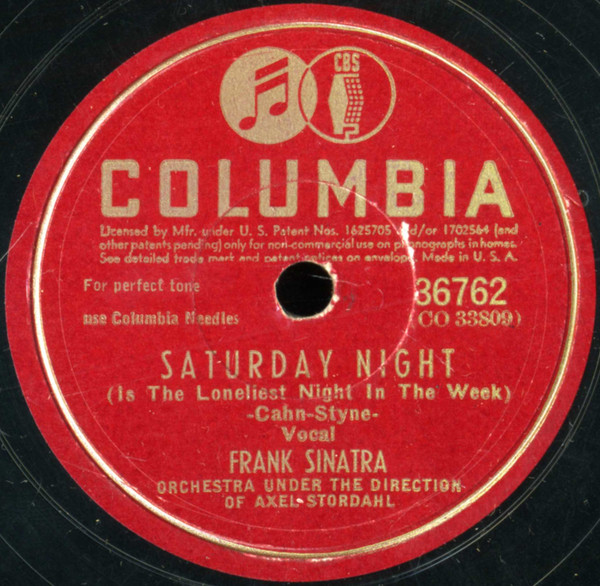
In 1944, lyricist Sammy Cahn was referring to romantic couples separated during the war when he wrote “Saturday Night is the Loneliest Night in the Week,” which Frank Sinatra took to #2 on the old “Hit Parade” in 1945: “That’s the night that my sweetie and I used to dance cheek to cheek… Until I hear you at the door, until you’re in my arms once more, Saturday night is the loneliest night in the week…”
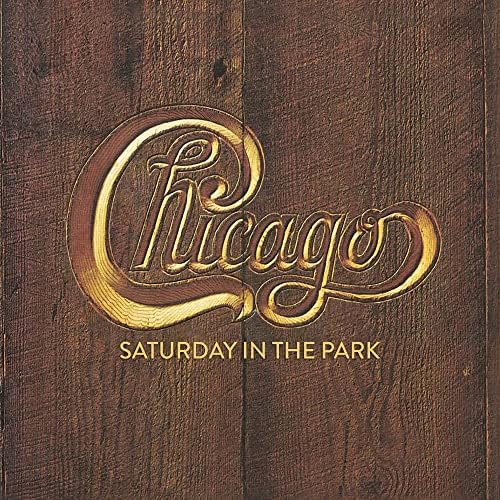
In 1972, Robert Lamm of the venerable band Chicago spent a Saturday afternoon in Central Park, listening to the steel drums and singers, watching dancers and jugglers, and said, ‘Man, I’ve got to put music to this,” and “Saturday in the Park” was the result: “People dancing, people laughing, a man selling ice cream, singing Italian songs… and I’ve been waiting such a long time for Saturday…”
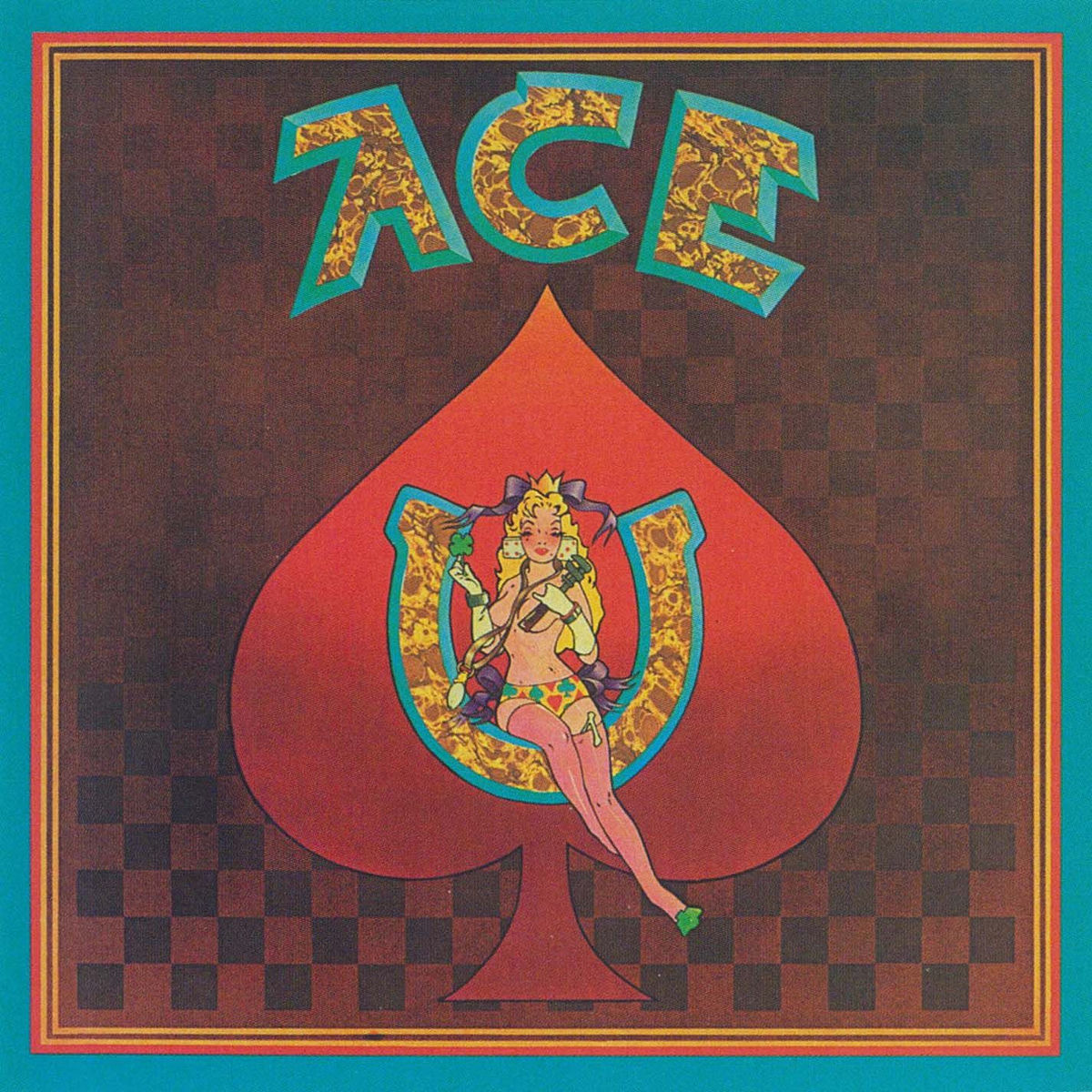
Members of The Grateful Dead were given the chance to release solo LPs in 1972, and guitarist Bob Weir‘s album “Ace” is essentially a Dead album because the whole band plays on almost every track. A highlight was his song “One More Saturday Night,” which was also featured on the group’s 3-record live package “Europe ’72” the same year: “The temperature keeps rising, everybody getting high, come the rockin’ stroke of midnight, the whole place gonna fly, oh hey, one more Saturday night…”
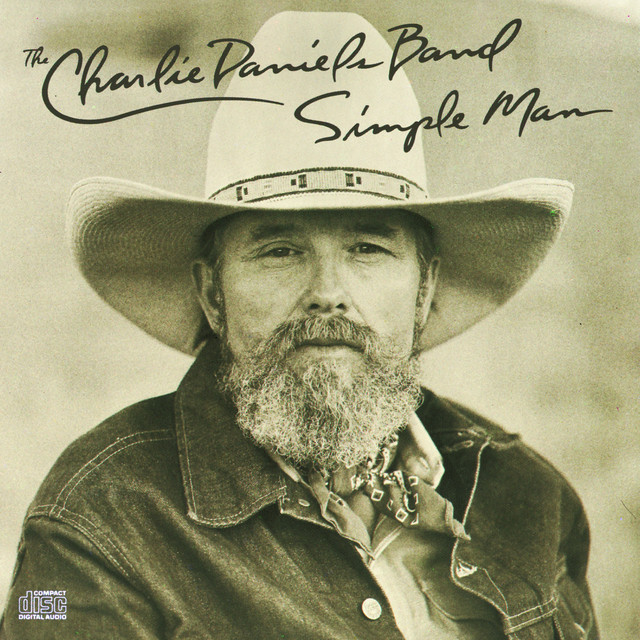
Charlie Daniels came up with “Saturday Night Down South,” a soothing beauty from 1989 in which he paints a serene picture of how Saturday night doesn’t have to be wild and festive in order to be full of memorable good times: “Full moon shining through the long-leaf pines, fireflies playing in the honeysuckle vine, everybody’s groovin’, everything’s just fine, ’cause it’s Saturday night down south…”
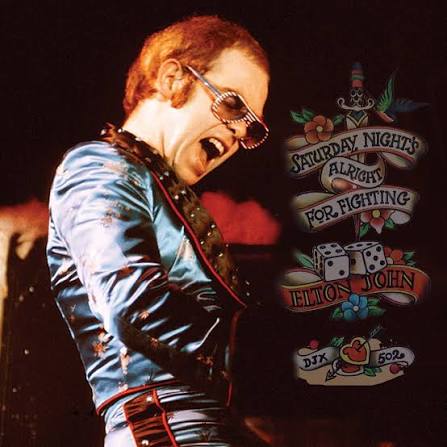
On 1973’s “Goodbye Yellow Brick Road” LP, Elton John and Bernie Taupin came up with “Saturday Night’s Alright for Fighting,” which says it’s okay to get involved in a few dust-ups on a weekend night now and then: “Don’t give me none of your aggravation, I’ve had it with your discipline, Saturday night’s alright for fighting, get a little action in…”
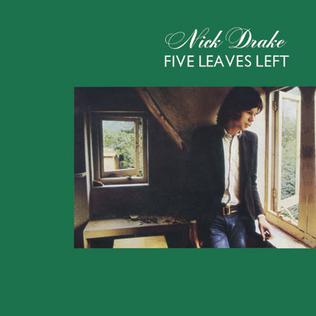
The tragic story of multi-talented singer-songwriter Nick Drake, who died a young troubled man in 1974, includes the poignant “Saturday Sun,” from his 1969 debut LP, “Five Leaves Left”: “Saturday sun came early one morning in a sky so clear and blue, Saturday sun came without warning, so no one knew what to do…”
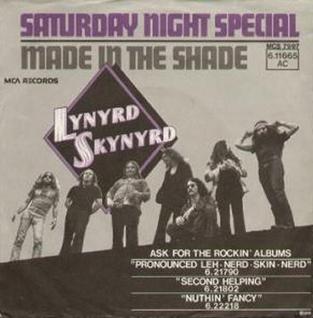
Southern rockers Lynyrd Skynyrd turned Saturday night into a chilling tale of murder in their 1974 song “Saturday Night Special,” which refers to both the main character and the gun he uses to commit his foul deeds: “Mister Saturday night special, got a barrel that’s blue and cold, ain’t good for nothing buy to put a man six feet in the hole…”
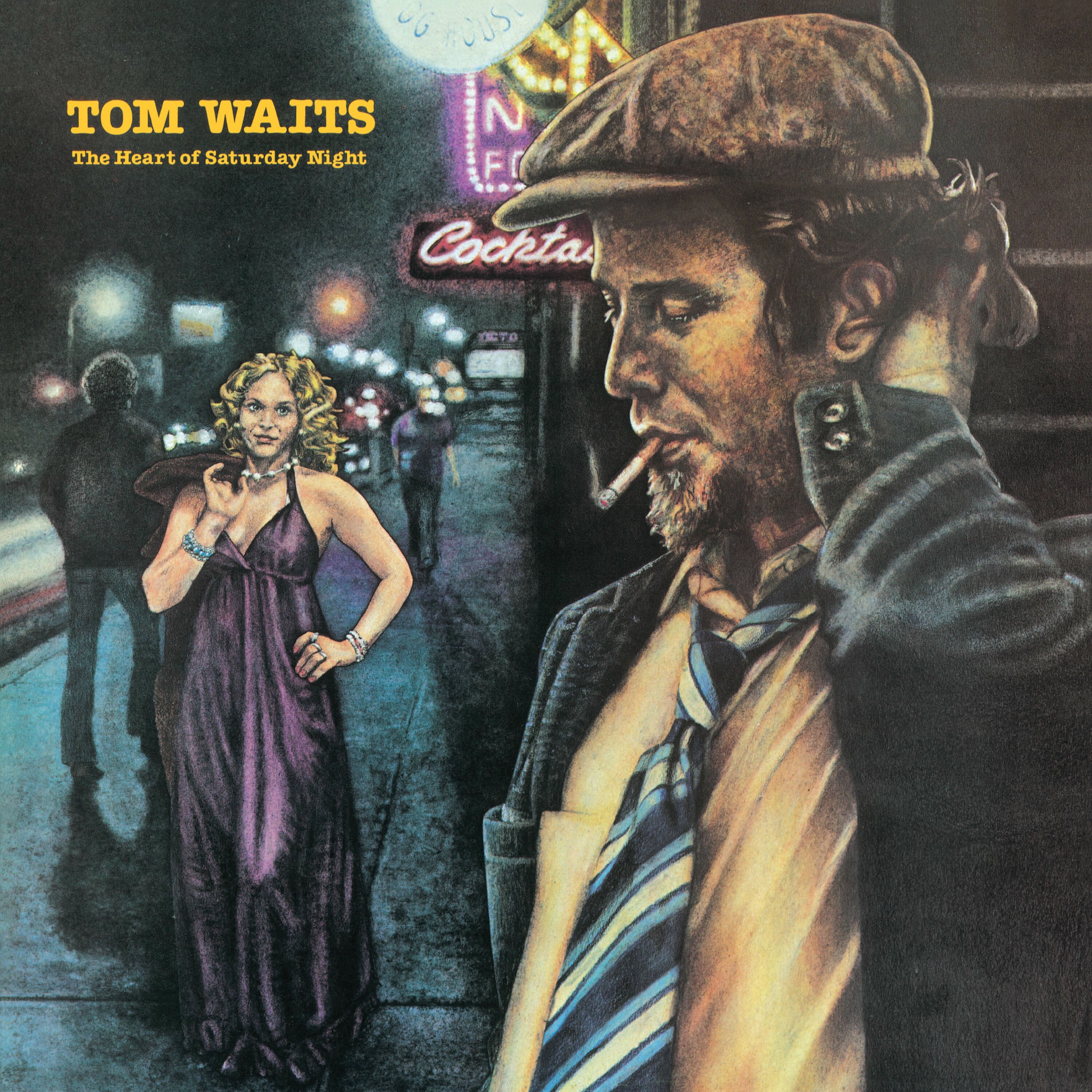
The first three or four albums Tom Waits released in the mid-1970s are absolute jewels in their uncanny ability to create a musical and lyrical vibe that captures the seamy underbelly of life in the big city. The central theme song for his 1974 masterpiece “The Heart of Saturday Night” explores the narrator’s search for the pulse of the weekend, first full of hope but ultimately defeated: “Well, you gassed her up, you’re behind the wheel with your arm around your sweet one in your Oldsmobile, barreling down the boulevard, you’re looking for the heart of Saturday night…”
Saturday honorable mentions:
“Saturday Nite,” Earth Wind & Fire, 1976; “Saturday Night at the Movies,” The Drifters, 1964; “Saturday Freedom,” Blue Cheer, 1969; “Drive-In Saturday,” David Bowie, 1973; “Saturday,” The Judybats, 1992; “Saturday Night,” The Commodores, 1981; “Saturday at Midnight,” Cheap Trick, 1982; “On a Saturday Nite,” Journey, 1976; “Save Me a Saturday Night,” Neil Diamond, 2005; “Almost Saturday Night,” John Fogerty, 1975; “Black Saturday,” Soundgarden, 2012; “Saturday Night,” Bay City Rollers, 1978.
***************************
Finally, supposedly our day of rest, SUNDAY, has 20 songs. I’ve selected 10, with the rest included as honorable mentions:
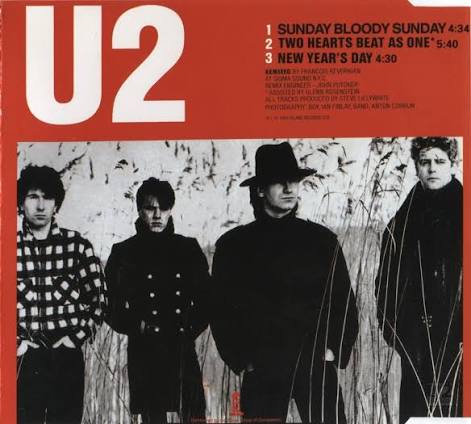
Bono and U2, always fiercely Irish, made an emphatic statement in 1983’s “Sunday Bloody Sunday” about the January 1972 Sunday afternoon killing of unarmed protesters by British soldiers in the early ’70s. But it’s really a cry out against violence and unrest everywhere: “Mothers, children, brothers, sisters, torn apart, Sunday, bloody Sunday, how long? How long must we sing this song?…”
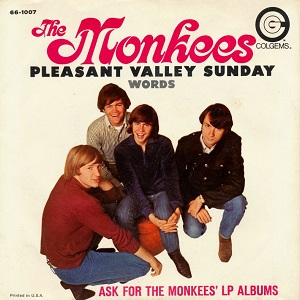
Carole King and soon-to-be-ex-husband Gerry Goffin wrote “Pleasant Valley Sunday,” a critical look at the monotony of suburban life, just as their marriage and songwriting team were falling apart, and The Monkees made it a big #4 hit in 1967: “Another pleasant valley Sunday, charcoal burning everywhere, rows of houses that are all the same, and no one seems to care…”
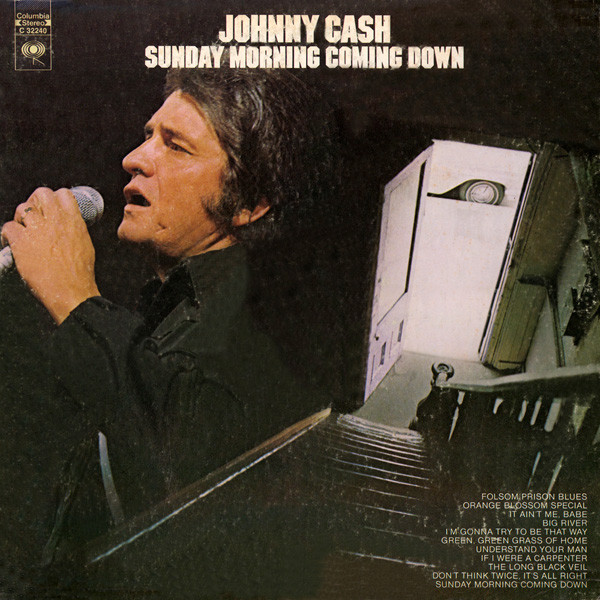
Kris Kristofferson, songwriter extraordinaire, came up with “Sunday Morning Coming Down,” a gritty tune about dealing with the hangovers and regrets of Sunday following the excesses of Saturday. He and Johnny Cash each recorded it, and they also performed it together as part of The Highwaymen: “Well I woke up Sunday morning with no way to hold my head that didn’t hurt, and the beer I had for breakfast wasn’t bad, so I had one more for dessert… /And there’s nothing short of dying, half as lonesome as the sound, on the sleeping city sidewalks, Sunday morning coming down…”
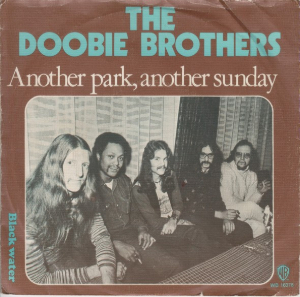
When the relationship doesn’t work out and you wake up Sunday morning on your own, The Doobie Brothers’ “Another Park, Another Sunday,” from 1974’s “What Were Once Vices Are Now Habits” should help ease the pain: “My car is empty and the radio just seems to bring me down, I’m just trying to find myself, a pretty smile I can get into, it’s true, I’m lost without you, another lonely park, another Sunday, it’s dark and empty, thanks to you…”
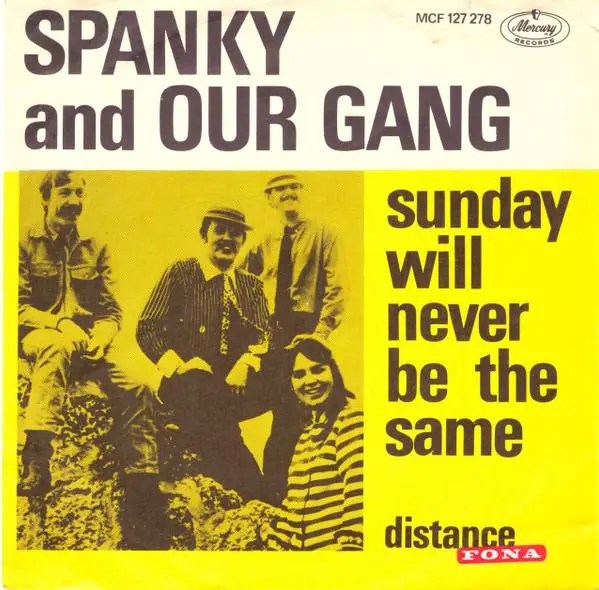
“Sunday Will Never Be the Same” is a classic bit of vocal bubblegum pop from Elaine “Spanky” McFarlane and Our Gang in 1967: “I remember Sunday morning, I would meet him at the park, we’d walk together hand in hand ’til it was almost dark, now I wake up Sunday morning, walk along the lane to find, nobody waiting for me, Sunday’s just another day…”
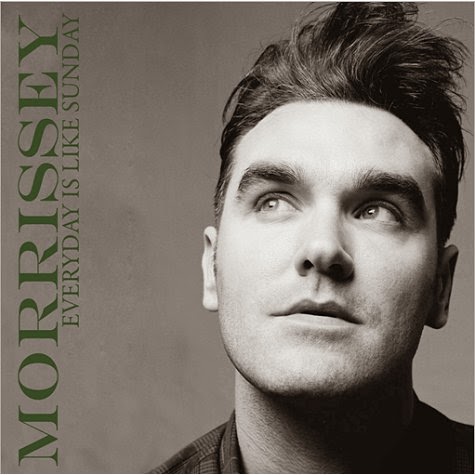
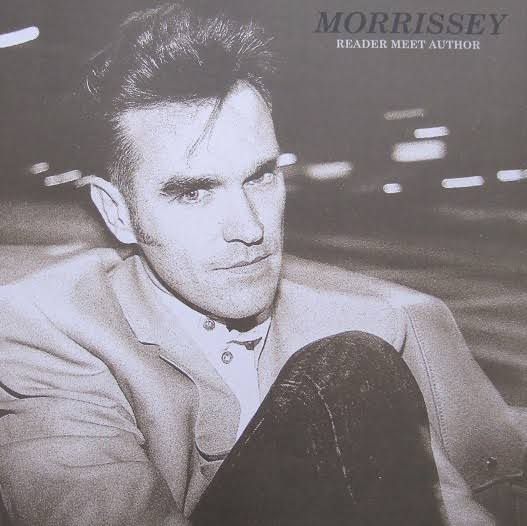
After leaving The Smiths to strike out on his Owen, lead vocalist Morrissey came out of the solo gate with the strong debut “Viva Hate,” which showcased his penchant for downer lyrics as “the Mahatma of mope rock,” as one critic described him. The second single, “Every Day is Like Sunday,” focuses on a post-nuclear scenario in a British coastal town, and although it didn’t chart in the US, it peaked at #9 in the UK: “Hide on the promenade, etch a postcard, ‘How I dearly wish I was not here,’ /In the seaside town that they forgot to bomb, every day is like Sunday, every day is silent and grey…”
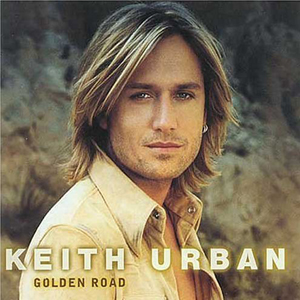
From his “Golden Road” LP in 2002, Keith Urban did a solid cover version of country singer-songwriter Radney Foster’s “Raining on Sunday,” which peaked at #3 on US country charts while just barely making the Top 40 charts at #38. The lyrics offer a suggestive way to while away the hours on Sunday if the weather turns foul: “Pray that it’s raining on Sunday, stormin’ like crazy, We’ll hide under the covers all afternoon, baby, whatever comes Monday can take care of itself, ‘Cause we got better things that we could do when it’s raining on Sunday…”
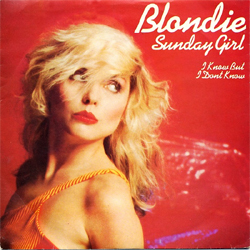
Blondie’s song “Sunday Girl,” from their 1978 hit album “Parallel Lines,” describes an elusive girl who wants to join the fun but has doubts and reservations: “I know a girl from a lonely street, cold as ice cream but still as sweet, dry your eyes, Sunday girl, hey, I saw your guy with a different girl, looks like he’s in another world, run and hide, Sunday girl…”
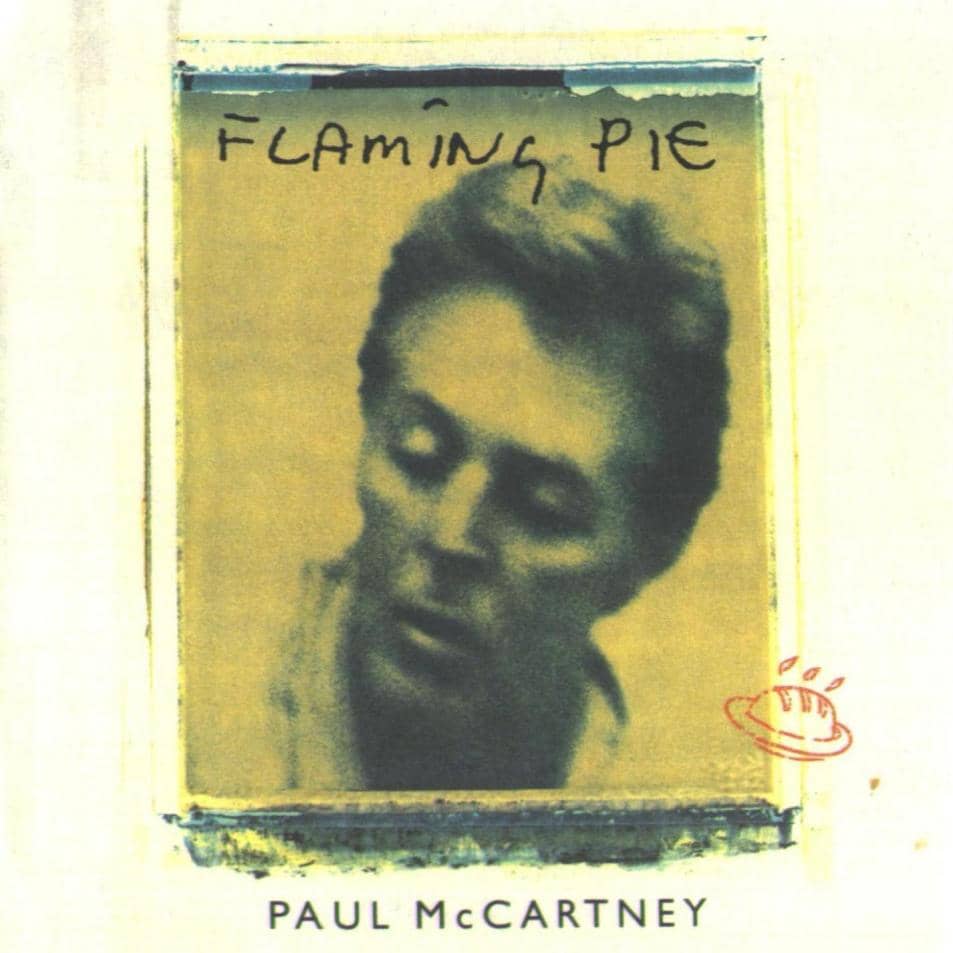
Paul McCartney’s solo career is full of songs that run the gamut from joyous anthems and meaty rockers to lovely ballads and lightweight filler. From his well-regarded 1997 LP “Flaming Pie,” I’ve always found “Heaven on a Sunday” to be an appealing example of his mellower side: “Peaceful, like heaven on a Sunday, wishful, not thinking what to do, we’ve been calling it love, but it’s a dream we’re going through, and if I only had one love, yours would be the one I choose…”
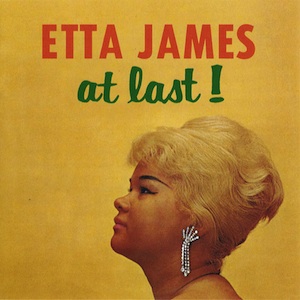
The spectacular voice of Etta James is best known for the classic love song “At Last,” but she could wrap her pipes around so much more. From that same 1960 debut album, you can find the jazz pop standard, “A Sunday Kind of Love,” co-written by Louis Prima back in 1946 to describe a love that’s more lasting than a one-night fling: “I want a Sunday kind of love, a love to last past Saturday night, /And I’d like to know it’s more than love at first sight, /And I want a Sunday kind of love…”
Sunday honorable mentions:
“Sunday,” The Cranberries, 1993; “Sunny Sunday,” Joni Mitchell, 1998; “Sunday Morning Call,” Oasis, 2000; “Sunday,” David Bowie, 2002; “On Sunday,” ‘Til Tuesday, 1986; “I Met Him on a Sunday,” The Shirrelles, 1961; “Sunday Morning,” Maroon 5, 2002. “Black Sunday,” Jethro Tull, 1980; “Sunday in New York,” Bobby Darin, 1964; “Sunday Mornin’,” Spanky and Our Gang, 1968.
***************************